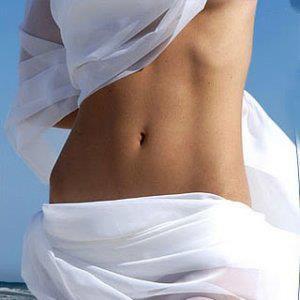
Factors such as pregnancy, age, and weight fluctuations lead to stubborn deposits of fat which are difficult to eliminate with a regular diet and exercise regimen. Liposuction by Dr. Rokhsar is designed to gently remove fat from certain areas, providing better contouring and an improved overall appearance. Liposuction 1 (liposculpture) is frequently performed by Dr. Rokhsar in his Manhattan and Long Offices under local anesthesia making the procedure simple. We have an accredited operating room (Quad A accreditation similar to hospitals). The tumescent liposuction procedure performed by Dr. Rokhsar is very effective for removing stubborn fat deposits in many areas of the body, including the abdomen, waist, arms, legs, neck, back fat, bra fat, chin, jowls, knees, and other anatomic areas.
Under the care of double board-certified dermatologic surgeon Dr. Rokhsar, liposuction is safe and offers optimal results. At our NYC and Long Island practice, Dr. Rokhsar offers the latest, most advanced liposuction techniques to produce beautiful, desirable contours and a more athletic appearance with even results. Dr. Rokhsar is also an expert in fixing botched liposuction jobs by other surgeons.
You can remove unwanted fat, safely and gently in any body surface area with Dr. Rokhsar’s liposuction technique. As one of the most experienced liposuction surgeons in New York and Long Island, Dr. Cameron Rokhsar uses the most advanced minimally invasive liposuction techniques in a state-of-the-art accredited surgical facility.
Liposuction is an option for those that would like to remove excess fat in selected areas. Body reshaping can also be done through SmartLipo, CoolSculpting, and Kybella injection which dissolves fat. Although the skin contracts with Dr. Rokhsar’s liposuction technique, if more skin tightening is needed, Dr. Rokhsar is an expert in the Thermitight radiofrequency skin tightening procedure, considered the gold standard for skin tightening.
Full-body liposuction is a surgical procedure that involves removing unwanted fat from multiple areas of the body, including the abdomen, hips, thighs, buttocks, arms, and neck. This procedure is not intended for weight loss, but rather for body contouring and shaping.
It is essential to choose a board-certified surgeon with extensive experience in liposuction procedures to ensure the best possible outcome. During the consultation, Dr. Rokhsar will evaluate the patient’s medical history, body type, and goals for the procedure. He will also discuss the various techniques for liposuction, including traditional liposuction, laser-assisted liposuction, and ultrasound-assisted liposuction, to determine the best approach for the patient.
Full-body liposuction is a major surgical procedure that requires careful consideration and planning. Patients should be aware of the potential risks and complications associated with this procedure, such as bleeding, infection, and uneven results. It is important to follow the surgeon’s pre-and post-operative instructions carefully to ensure a safe and successful recovery. Dr. Rokhsar does not remove more than 4 liters of fat during a session for your safety as mandated by New York law.
Stomach liposuction is a cosmetic surgical procedure that is designed to remove excess fat from the stomach area, resulting in a flatter and more defined abdominal contour. This procedure is particularly popular among men and women who have undergone significant weight loss but are struggling with stubborn pockets of fat that do not respond to diet and exercise.
During a stomach liposuction procedure, a plastic or dermatologic surgeon will use a suction technique to remove excess fat from the stomach area, including the abdomen, waist, and love handles. This procedure is typically performed under local or general anesthesia and involves the use of small incisions that are strategically placed in discreet locations. The surgeon will then use a small cannula, or tube, to suction out the excess fat from the targeted areas.
while stomach liposuction can improve the appearance of the abdomen, it is not a weight loss procedure. It is designed to remove small fat deposits that are resistant to diet and exercise. Therefore, it is most beneficial for individuals who are close to their desired weight and are looking to contour their bodies.
Back liposuction, also known as back lipo, is a surgical procedure that uses a specialized cannula connected to vacuum suction to remove excess fat from specific areas of the back, including the upper, middle, and lower regions. The procedure can help eliminate stubborn, fibrous fat that is difficult to treat through diet and exercise alone, resulting in a more defined, arched-shaped back. Dr. Rokhsar performs all his back liposuction procedures under local anesthesia so he can turn you to different sides during the procedure to achieve the best results. Also, liposuction done under local anesthesia will expedite healing and minimize downtime.
Back liposuction is typically performed as an outpatient procedure under local or general anesthesia, depending on the extent of the treatment. During the procedure, small incisions are made in the targeted area, and the cannula is inserted to suction out the unwanted fat. Recovery time varies depending on the extent of the procedure, but most patients can return to work and normal activities within a few days.
liposuction is not a substitute for a healthy lifestyle and should not be considered a weight-loss solution. The procedure is best suited for individuals who are close to their ideal weight but have stubborn areas of fat that do not respond to diet and exercise.
Liposuction of the thighs, normally the inner thighs or outer thighs, is a common procedure that Dr. Rokhsar performs on a routine basis. Unfortunately, Diet and exercise alone typically do not address fat deposits in the thigh area, leaving liposuction as a great option for reducing the size of the inner or outer thighs. Dr. Cameron Rokhsar, an NYC-based double board-certified dermatologic surgeon removes the fat carefully to avoid contour irregularities using small microcannulas.
Fat accumulation in the buttocks region can be greatly reduced using liposuction. The procedure can improve not only size but shape and symmetry. Subcutaneous fat can collect along the buttocks, just over the gluteus maximus muscles. In addition, many patients get fat deposits between the butt and the thighs, a condition commonly referred to as banana rolls. Liposuction is a great treatment for banana rolls as well.
Different types of fat accumulation along the buttocks:
Saddlebags are an accumulation of fat typically found in women. The most common areas for fat deposits in women are the abdominal area, hips, and thighs. Liposuction is used effectively to treat saddlebags, with the option to combine procedures to address dimpling and improve contour. Saddlebags appear on the outer thigh area as a bulge which many women find unshapely. Tumescent liposuction performed under local anesthesia is a great simple solution to permanently remove saddlebags to create more shapely legs.
Liposuction is frequently performed on the upper arms, but Dr. Rokhsar also uses the treatment to address other areas such as “bra rolls or bra fat.” Dr. Rokhsar performs his liposuction techniques carefully with small cannulas to prevent over-removal of fat and ensure against skin rippling or irregularities. If additional skin tightening is needed, Dr. Rokhsar can use the ThermiTight procedure which causes skin retraction due to radiofrequency heating of the skin from the inside out.
Arm liposuction is used to improve a disproportionate appearance of the arm, or create a thinner appearance of the arms fitting the rest of the body. The entire procedure is done under local anesthesia with the tumescent technique 3, eliminating risks related to general anesthesia. Recovery with this technique is only a few days.
Excessive fat can deposit along the arms in different ways:
Knee liposuction is a surgical procedure that is designed to remove excess fat from the inner and outer knee areas, resulting in a more sculpted, slimmer appearance. This procedure can be performed in conjunction with liposuction of the thighs or as a stand alone-procedure. Knee liposuction is not a weight loss solution, and it is recommended for individuals who are already at or near their ideal body weight with bulging fat from the knees.
During the procedure, a small, thin cannula is inserted into specific locations around the knee through small incisions after the area is numbed with tumescent fluid which anesthetizes the area of the knee and stops the bleeding. Dr. Rokhsar will then gently suction out the excess fat from the knees. The recovery time after knee liposuction is typically minimal, with most patients returning to work and normal activities within a few days.
Knee liposuction can be an excellent option for individuals who are self-conscious about the appearance of their knees, particularly those who have fatty deposits around the knee region that are resistant to diet and exercise. It can help to correct asymmetrical knees and improve emotional well-being, with high patient satisfaction rates.
Facial liposuction is a cosmetic procedure that is performed to resculpt the cheeks, chin, jawline, and neck, resulting in a more youthful facial contour and an attractive profile. The procedure involves the use of suction to remove excess fat from specific areas of the face, such as the submental area (under the chin), cheeks, jowls, and neck. The procedure is typically done under local anesthesia and takes about one to two hours to complete. Patients can expect some bruising and swelling after the procedure, but this typically resolves within a week. It is recommended to wear a special compression garment after this procedure, which our office will provide for you.
Facial liposuction can be a great solution for those who have excess fat accumulation in the face and neck and the chin area giving the appearance of a double chin. Facial liposuction will help you achieve a more youthful, slim, and toned appearance.
Chin liposuction, also known as submental liposuction or “chin lipo,” is a minimally invasive surgical technique that removes excess fat from under the chin and jawline via a small, thin tube called a cannula. The procedure can also reduce the appearance of jowls. It is typically performed under local anesthesia and takes around 60 to 90 minutes to complete. The amount of fat removed depends on the appearance of the area and the volume of fat. The procedure can be done alone or in conjunction with other facial procedures such as a facelift.
One advantage of chin liposuction over other double chin surgeries is that it is less invasive and less time-consuming. It is also generally less expensive than other procedures, depending on the complexity of the procedure, quality of the facility, medication, equipment used, and type of anesthesia.
The quality of the skin, specifically the laxity, will affect the level of results that can be achieved with chin liposuction. Chin procedure can inherently tighten the skin in most individuals without the need for additional surgery or other procedures as the fibrosis under the skin results in significant skin tightening.
Submental liposuction, also known as chin liposuction or neck liposuction, is a cosmetic surgery procedure aimed at removing excess fat deposits under the chin and jawline. This procedure is suitable for individuals with a double chin or who desire a more defined jawline.
During the procedure, Dr. Rokhsar first numbers the desired area with numbing fluid. He then makes a small incision under the chin and inserts a cannula, a thin tube, to remove the excess fat. The procedure is typically performed under local anesthesia and takes about an hour to complete. The recovery time is usually quick, with most patients returning to work and normal activities within a few days.
While neck liposuction is effective for removing excess fat and improving contour, it cannot correct structural problems that contribute to the appearance of the neck. For instance, a neck lift is a cosmetic procedure that removes excess skin and fat around the jawline, creating a more defined and youthful-looking neck. A neck lift is a more invasive procedure than neck liposuction, but it can provide more significant and longer-lasting results.
Cheek liposuction is a surgical procedure that involves removing excess fat from the cheeks to contour and reshape the face. The procedure is performed by making small incisions in the skin around the cheek area and using a cannula to suction out the fat cells.
The recovery time after cheek liposuction varies, but most patients can return to their normal activities within a few days. It is important to follow post-operative instructions to minimize swelling and bruising and to avoid strenuous activities for a few weeks. The results of cheek liposuction are long-lasting, and patients typically enjoy a more defined, contoured face.
Cheek liposuction is not the same as buccal fat removal, which is another surgical procedure that involves removing fat from the cheeks. While both procedures aim to contour the face and improve facial features, they differ in the area of fat removal and the technique used to remove the fat.
Liposuction is a popular cosmetic procedure that can remove unwanted fat from specific areas of the body, resulting in a more contoured and defined appearance. While liposuction is often associated with women, it is also a popular option for men who want to achieve a leaner, more muscular physique.
Liposuction for men typically targets areas such as the abdomen, flanks (love handles), back, and neck. This procedure can be an effective way to remove stubborn fat pockets that are resistant to diet and exercise. It can also help men achieve a more defined and toned look, particularly in the abdominal area where it can create the appearance of a “six-pack.”
The male breast is composed of fat (adipose) and connective (fibrous glandular) tissue.
Liposuction for male breasts is a cosmetic procedure used to remove unwanted pouches of fat without damaging the skin or surrounding muscles. Liposuction for men on the breasts, abdomen, flanks and jowls are the most common areas treated. Male breast tissue is usually located immediately under the nipple and is firmer than the surrounding fatty tissue.
A mammogram can help the doctor asses where the fatty tissue is located. It is easier to remove fatty tissue located near the breast than it is in the glandular region.
Liposuction is performed with a typically smaller tube inserted into small incisions in the breast. Unwanted tissue is then removed through a suction pump carried through the small tubes. Local anesthesia is used throughout the procedure to keep the patient at ease, and after surgery is complete, stitches will be placed along incision lines. Compression devices should be applied 18 to 24 hours post surgery in order to avoid bleeding and bruising.
Laser liposuction is a procedure found to be very successful among men that have relatively normal weight, but isolated pockets of fat, such as the breast. Because lasers emit heat, the skin contracts, giving a tightening affect as well. Laser liposuction used in conjunction to surgical liposuction can yield the best results depending on the patient’s goals. Laser liposuction used alone is generally used for body contouring, achieving a normal breast shape, instead of used as a weight loss solution.
Men accumulate fat on their bodies differently than women. The most common place for liposuction for the male patient is the waist and back, also known as love handles. Male patients tend to carry their weight in their midsection, while women tend to be more bottom heavy. The abdomen and male breasts are also places that have been treated. Especially those who suffer from gynecomastia, a benign condition where a hormonal imbalance that normally occurs during pubescence causes the development of male breasts.
Tumescent liposculpture works similarly to a normal standard liposuction procedure, which is the removal of excess body fat by means of suctioning the fat through small cannulas inserted into small incisions.
Liposculpture by NYC’s leading dermatologic surgeon, Dr. Rokhsar, is a more advanced form of liposuction. It’s the removal and reshaping of the fat in areas such as the stomach, chin, and neck. It works by using a tumescent fluid to both numb and help liquefy the fat. The anesthetic solution is injected to help constrict the arteries and blood vessels in the treated area in order to keep bleeding and swelling to a minimum. Liposculpture is also performed under local anesthesia which eliminates risks associated with general anesthesia and sedation. After the fluid is injected, small incisions are made and a micro-cannula is inserted into the treatment location. Unwanted fat is then removed by a high-pressure vacuum.
Liposculpture is a minimally invasive procedure, which decreases the patient’s downtime post procedure significantly. The recovery will allow the patient to return to work two to three days afterward and physical exercise can resume shortly after. Because the procedure removes fat and contours the body, Liposculpture will leave the patient with more even results.
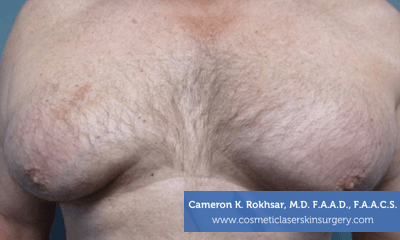

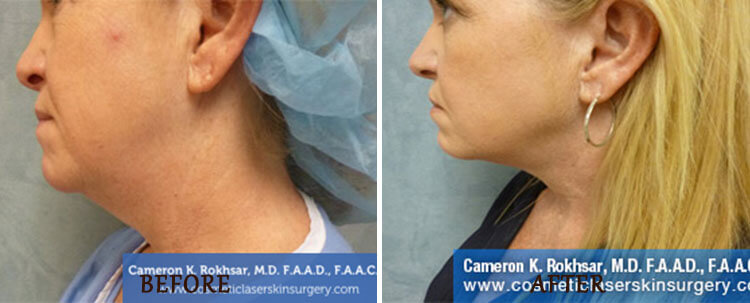
* This is before and after of minimally invasive lipo of neck and jawline done under local anesthesia. Results are significant with minimal downtime.
Sometimes, no matter how much you diet and exercise, getting the body shape you want is problematic. Some areas of the body simply don’t respond well to diet and exercise. So if you want to contour your body, you need to look at other solutions. One of the best solutions may be a combination of liposculpture and liposuction.
Liposculpture & liposuction are safe1 and simple procedures that gently reshape your body. Liposculpture and liposuction remove excess fat from the thighs, buttocks, abdomen, waistline, arms, knees, ankles, calves, cheeks, jowls, and neck. Traditional liposuction2 uses lager cannulas while liposculpture is gentler than traditional liposuction as micro-cannulas (small, thin, hollow instruments) provide for more precise sculpting.
Not only are your results more even with this technique, but it also allows for faster recovery. You will be able to return to work 2-3 days later and can start working out soon thereafter. Another advantage is that liposculpture can be done purely under local anesthesia if desired, which eliminates the risks associated with general anesthesia and sedation.
Click here to read Dr. Rokhsar’s article on Tumescent Liposuction at Emedicine.com.
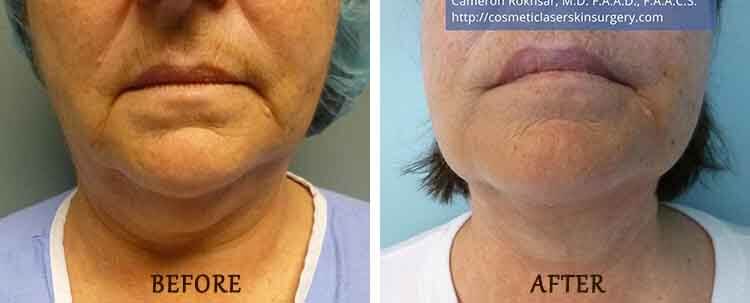
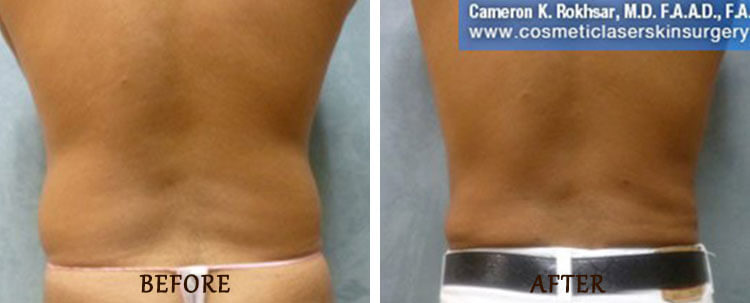
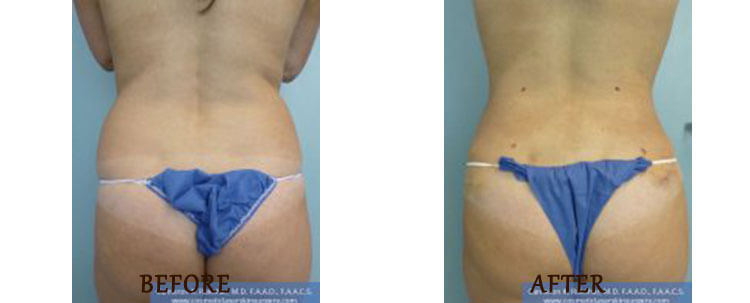
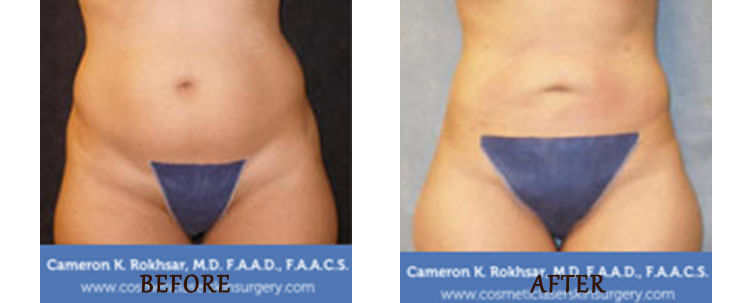
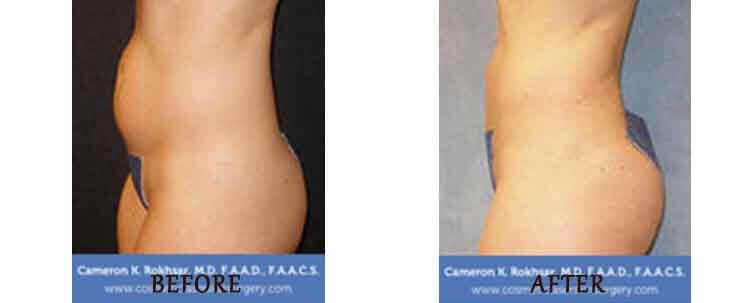
*Results may vary.
While liposculpture and liposuction3 are not the answer to obesity, they can help you lose inches from undesirable places. By reshaping your body and reducing problem areas, you will look slimmer and fit better in your clothes. Age by itself is not a significant factor in who can benefit from this procedure. Dr. Rokhsar has treated patients in their twenties to patients in their seventies with this technique.
One of the most impressive aspects of tumescent liposculpture is that the skin quality is not altered by the micro-cannulas. The skin is a dynamic organ which has elasticity and, in most cases, shrinks to accommodate the new body contour. Therefore, there is no need to remove excess skin with surgery. We refer to this procedure as “liposculpture” because new techniques allow Dr. Rokhsar far more flexibility and control than ever before. He can, therefore, more easily blend in your new results and your desired loss with your current body type.
In other words, Dr. Rokhsar can help you remove fat from the areas you don’t want it, but keep it around where it suits your desired results. This helps patients achieve a much more naturalistic-looking final result, meaning that most people who see you will probably just assume you’ve lost weight the natural way. If you’re interested in this procedure. contact Dr. Rokhsar to get started right away.
Dr. Rokhsar provides a wide range of services to his New York liposuction patients. Recovery from liposuction in Dr. Rokhsars’ hands is usually just a few days. You should be able to resume daily activities, like work, in a couple of days after your liposuction procedure. Fluid retention and swelling may persist for a few weeks, but usually only at a minor level.
Furthermore, Dr. Rokhsar gives each of his patients unique and individualized recovery instructions designed not only to provide for their comfort but also to help preserve the results of the liposuction procedure.
Some of the most common side effects of liposuction include bruising, swelling, and changes in skin sensation, such as numbness or tingling. These side effects are usually temporary and will resolve on their own within a few weeks to a few months. Other potential side effects of liposuction include fluid accumulation, infection, and scarring.
One of the most significant risks associated with liposuction is uneven fat removal, which can result in an uneven or lumpy appearance. In rare cases, liposuction can cause damage to deeper structures such as nerves, blood vessels, muscles, and abdominal organs. This can lead to serious complications such as internal bleeding, infections, and blood clots. Dr. Rokhsar uses the tumescent technique with microcannulas performed under local anesthesia. This is the safest method of doing liposuction eliminating most risks. Dr. Rokhsar’s use of small cannulas, and the fact that he takes his time doing the procedure and does not rush through it, ensures that patients get great even results without skin dimpling or lumpiness.
Liposuction is not a weight-loss solution and should not be considered as such. While liposuction can remove excess fat from specific areas of the body, it cannot prevent the accumulation of new fat in the future. Patients who undergo liposuction must maintain a healthy diet and exercise routine to prevent new fat from accumulating and to maintain their desired body shape.
Once recovery is complete, most patients notice a significant change in the shape of their body, slimmer, but with natural-looking curves and contours. For many patients, the reshaping of the fatty areas that have plagued them for years can be a positive experience and boost confidence. Individual results will vary from patient to patient. Final results are usually seen three months post-liposuction even though people look considerably better immediately after the procedure. People continue to improve over the next three months as the skin contracts and patients look tighter.
*Results may vary.
New York is a city that never sleeps…but, let’s face it, with all that hustle and bustle, not everyone has several hours a day to dedicate to sculpting an ideal body at the gym. Or maybe you’re super dedicated, but despite your best efforts, there are still some areas you could use a little help with.
No doubt you’ve heard about liposuction and maybe you’re considering it as an option to get the body you’ve always wished you had, but there are so many different treatment types available. How do you know if liposuction is right for you, and if so, which kind?
Let’s have a look at the types of liposuction and some information on each:
Dr. Rokhsar specializes in tumescent, laser, and ultrasonic-assisted liposuction methods, helping to minimize blood loss, swelling, bruising, and post-op recovery, and has a wealth of experience treating patients with a wide variety of needs.
Moreover, Dr. Rokhsar is widely recognized as a New York liposuction expert and performs a variety of liposuction and liposculpture options to address your needs. To get started on your liposuction procedure 6, contact, contact us today!
When you decide to undergo liposuction, it is one of the biggest steps you can make for starting your weight loss journey.
Overall, liposuction is a safe and reliable surgery, which was invented in 1974 by Italian surgeons, Giorgio and Arpad Fischer. Over the last 40 years, the procedure has been virtually perfected and has become a popular, major weight loss treatment.
One of the biggest downfalls of undergoing liposuction is the fact that you will have to become a surgical candidate and any type of surgery is riskier than a non-surgical procedure. In addition, you would also need to consistently watch your diet and exercise to maintain your great results.
This type of procedure may also leave some type of scarring. Dr. Rokhsar is an expert in treating scars. If there is any area of scarring at the entry point of the cannulas, Dr. Rokhsar will use the Fraxel laser to erase the scars. After having the surgery, you may be able to return to work after a few days, however, there may still be some swelling and bruising on your body for a couple of weeks.
Dr. Rokhsar will require that you wear a tight-fitting garment, similar to a post-surgical girdle in order to reduce the swelling for a week. This is shorter than what other doctors recommend (up to 6 weeks) because Dr. Rokhsar believes that you heal faster without compression if taken off at one week.
CoolSculpting is a procedure developed at Wellman Laser Laboratories at Harvard Medical School 5 and is based on research that has shown fat cells are more vulnerable to cold temperatures than any other surrounding tissue. Extreme cold temperatures are emitted through cooling plates that suction the targeted area for an hour, during which time fat cells are turned from a soft to solid form.
Freezing fat cells through prolonged controlled cooling, allows the body to naturally metabolize frozen fat out of the body. Results begin to show in three weeks with progressive improvements within four months post-treatment. It is an effective and reliable non-invasive, FDA-approved procedure that uses a unique technique for destroying unwanted fat. Having non-surgical options is important, especially when it’s concerning your health.
Another FDA-approved procedure to dissolve fat non-surgically is Kybella injections. Kybella works by disrupting the membranes of the fat cells rupturing them open. Kybella is an effective treatment for localized fat reduction in small areas like the chin or the jowls.
Liposuction is a surgical technique used to remove excess fat from deposits between skin and muscle. After tumescent local anesthesia is administered, small incisions are made across the area and small cannulas are inserted. A strong suction pump removes the fat through the tube, making the total operation last between one to three hours long depending on the amount of fat being removed.
Candidates for liposuction should have sustained a relatively stable weight for months prior to surgery. Dietary consultation is advised before seeking surgical fat-removal options. The most frequent areas liposuction is performed on women are the outer and inner thighs, hips, waist, upper and upper back rolls, and abdomen. In men, love handles, breasts, and the chest area are most typically treated.
It is important to be aware of effective alternatives to fat reduction for those that are surgery averse.
The ultrasound of Liposonix creates a powerful thermal effect that focuses on specific depths in fatty layers, safely destroying fat without damaging surrounding tissue in a one-hour session. This minimal-risk procedure uses high-intensity focused ultrasound to destroy targeted fat in the abdomen, flanks, back, thighs, buttocks, and arms, which shows results within 8 to 12 weeks.
It should be noted that Liposonix has few exceptions for candidates. Those who are pregnant, using certain hematologic medications and those with a body mass index greater than 30 (obese), or inversely those with less than 1 cm of fatty tissue below the ideal treatment depth, or those with cancer.
Dr. Rokhsar has performed both procedures with great success. Both Liposuction and Liposonix can be performed to treat excess fat in the following areas:
While it’s true that the ideal patient for liposuction is already fit and just looking to improve problem areas, two main factors assist in determining whether someone is a good candidate or not: diet and exercise, and weight consistency. If someone has a poor diet and exercises infrequently before their procedure, chances are they will only gain the weight back afterward.
It is unsafe to remove any more than 8-10 pounds of fat (4 liters) via liposuction in a day, thus making it ineffective for treating someone who is significantly overweight. On the other hand, someone who is overweight but has maintained that weight over a long period and just has certain problem areas to deal with may be a good candidate for liposuction.
Contact Dr. Rokhsar, your Manhattan and Long Island liposuction expert, today for a consultation. Dr. Rokhsar is a world-renowned liposuction expert.
Dr. Rokhsar has done more tumescent liposuction procedures 4 than any other physician in New York City and has been doing it for 20 years. Dr. Rokhsar is fellowship-trained in liposuction surgery having finished a concentrated training year in liposuction surgery after residency.
Many dermatologists in Manhattan have entrusted Dr. Rokhsar with their liposuction surgeries. He is an internationally renowned cosmetic laser surgeon who has exceedingly advanced knowledge and experience working with Liposuction. Using Liposuction to contour the body, takes a surgeon, like Dr. Rokhsar, with significant training, impressive results, and expert patient care. If you’re interested in Liposuction in the New York area, contact us today.
Long Island is home to some of the best beaches around. Maybe you love the beach but haven’t been able to stick to that new diet or fitness routine the way you wanted to. Maybe you just have a few stubborn extra pounds that make you self-conscious. Whatever the reason, you, like so many others, feel like your body doesn’t quite look the way you’d like and wish you had a little help in getting it there.
Liposuction and liposculpture 2 provide worry-free methods of delicately reshaping your body through the removal of excess fat. Through the use of thin, hollow instruments called cannulas and tumescent fluid, fat is numbed, liquefied, and gently siphoned out of problem areas such as the thighs, buttocks, abdomen, waistline, arms, knees, ankles, calves, cheeks, jowls, and neck. Dr. Cameron Rokhsar is a widely recognized expert in tumescent liposuction and liposculpture, making him the perfect choice for your New York and Long Island liposuction needs.
Like any surgical procedure, liposuction has its risks. These risks include anesthesia risks, bruising, numbness, pain, swelling, and soreness. In rare cases, lidocaine toxicity can occur, which can cause serious heart and central nervous system issues. There is also a risk of developing deep vein thrombosis, cardiac and pulmonary complications, and fluid accumulation. These complications are seldom seen when liposuction is performed under local anesthesia with the tumescent technique. They are often encountered when liposuction is done under general anesthesia. That is precisely why Dr. Rokhsar prefers to perform all his liposuction procedures under local anesthesia with the tumescent technique. Damage to deeper structures such as nerves, blood vessels, muscles, lungs, and abdominal organs, and uneven fat removal, which can lead to body deformity are other possible complications when liposuction is performed by an inexperienced surgeon.
However, the risk of complications can be minimized by choosing a board-certified dermatologic surgeon who specializes in liposuction and has extensive experience in performing the procedure. It is also important to have a thorough consultation with your surgeon to discuss your medical history, current medications, and any concerns you may have about the procedure. Following your surgeon’s pre and post-operative instructions will also help minimize the risk of complications and ensure a safe and successful outcome. Dr. Rokhsar has performed liposuction successfully on hundreds of patients in his career with great results.
Modern liposuction emphasizes achieving desirable results through advanced techniques. Your liposuction procedure begins with the administration of a local anesthetic. When the anesthetic becomes effective, a small incision will be made in the area to be targeted by the liposuction procedure. The incisions made by Dr. Rokhsar are so small that they often don’t require suturing.
A small tube, called a cannula, is inserted through this incision. The cutting-edge liposuction procedure performed by Dr. Rokhsar uses the smallest cannulas possible to achieve the most even results. This method is less invasive compared to traditional liposuction. Dr. Rokhsar often combines the liposuction procedure with lasers to assist in melting the fat, or with ThermiTight to encourage skin tightening.
Dr. Rokhsar wrote an article on the process and benefits of tumescent liposuction. There are many reasons why one would be interested in liposuction. This procedure can help remove unwanted fat, giving you a slender look and enhancing your curves and accents. Liposuction is suitable if you:
If you are bothered by areas of fat that simply don’t respond to diet or exercise, liposuction may be your ideal option for getting the body you want.
As with any surgery, liposuction is accompanied by risks 7 such as bleeding, infection, skin irregularities, and luminess. More serious risks of blood clots, fat emboli, pulmonary embolism, or fluid retention in the lungs are generally associated with liposuction performed under general anesthesia. Dr. Rokhar prefers to perform his liposuction procedures under local anesthesia for your safety.
Liposuction is one of Dr. Rokhsar’s most highly sought-after procedures. The cosmetic treatment addresses and removes excess, stubborn fat, beautifully contouring the body.
Because of the nature of the tumescent liposuction technique, the procedure can be performed, if desired, under a simple local anesthetic and lasts about one to three hours depending on the amount of fat being removed. This technique also facilitates a faster recovery time than in traditional liposuction, allowing most patients to return to work in two to three days and even resume workouts shortly thereafter.
Manhattan life is about as fast-paced as it gets and first impressions are everything. Like most of us, chances are you weren’t blessed with perfect genetics or have the time to spend countless hours in the gym whittling away those last few stubborn pounds, so what’s an on-the-go person like yourself to do?
Maybe you’ve thought about liposuction. Maybe you even have friends who’ve had body sculpting done, but despite it all, you still have concerns that need to be resolved before you can go through with it. Dr. Cameron Rokhsar is a double board-certified dermatologic surgeon with years of experience doing liposuction with hundreds of happy liposuction patients. The liposuction techniques employed by Dr. Rokhsar are the safest, eliminating many of the risks associated with traditional liposuction. Dr. Rokhsar limits his liposuction to only 4 liters of fat (8 pounds) at a time, in compliance with NYC law, for your safety. If Dr. Rokhsar deems that you have more fat than four liters, he may divide the procedure into two separate days for your safety.
Fat is a highly sophisticated collection of lipids and works much like a battery; storing energy when we eat food and releasing it when we need it. Fat is also a good communicator, sending out hormonal signals to the body and brain, about how full or empty of energy we are. In cold weather, it insulates the body as a layer just below the skin’s surface. Unwanted fat develops out of high-calorie diets combined with sedentary lifestyles; however, fat can develop and remain even after diet and exercise, especially for those after they have had children.
The fat just underneath the skin is called subcutaneous fat. This is also the fat we have the most of, and the more we have, the more the skin stretches and misshapes the body. The other type of fat, visceral fat, surrounds the organs and although there’s less of it, it has more of an effect on our overall health and can increase the risk of heart attack, stroke, and diabetes. When we exercise, visceral fat is the first fat to go.
Liposuction is a surgical procedure that removes fat from specific areas of the body through a suction technique. Dr. Rokhsar is an expert in this procedure and performs liposuction with the tumescent technique. He has successfully performed this procedure on hundreds of patients on the abdomen, hips, waist, love handles, saddle bags, thighs, knees, buttocks, arms, and neck. During the procedure, Dr. Rokhsar makes tiny incisions and inserts a hollow, stainless-steel tube called a “cannula” into the fat layer. The cannula is moved back and forth to loosen the excess fat, which is then suctioned out of the body using a vacuum-like device. Liposuction permanently removes fat cells, helping to get rid of fat deposits that do not respond to diet and exercise. It can be an effective way to sculpt the body and remove stubborn pockets of fat in individuals with good skin tone and elasticity. However, liposuction is major surgery, and some steps and precautions must be taken to ensure a smooth recovery. Dr. Rokhsar will review everything you need to know for the procedure during your consultation with him. With Dr. Rokhsar’s unique technique and years of experience, downtime is only limited to a few days and recovery is quick. Dr. Rokhsar does all his liposuctions under local anesthesia which minimizes the risk and speeds up the recovery. Dr. Rokhsar also limits patients to wearing compression garments for one week only, whereas most other doctors keep patients in compression garments for weeks at a time. Dr. Rokhsar believes that this is an impediment to recovery. We invite you to visit Dr. Rokhsar’s extensive portfolio of all his liposuction before and after pictures and watch his interview by Good Morning America on liposuction.
The cost of liposuction varies depending on the area of the body and the extent of treatment required.
he average price includes the cost of the procedure itself and not related expenses such as anesthesia or operating room facilities. Dr. Rokhsar can give you a detailed price quote during your consultation. The good thing about Dr. Rokhsar’s technique is that he does his liposuction under local anesthesia. Therefore, there is major cost saving to the patient since they don’t have to pay thousands of dollars of anesthesiologist fees. In Addition, The New York Cosmetic Skin and Laser Surgery Center headed by Dr. Rokhsar is an accredited surgical facility accredited by AAAA (quad A). This means that Dr. Rokhsar provides the highest quality of care in a highly regulated surgical facility in our offices in Manhattan and Garden City, Long Island New York. It also means that patients save thousands of dollars on operating room fees.
There are several things that you should avoid doing after liposuction to ensure a smooth recovery.
Patients should avoid staying stationary for prolonged periods. It’s good to move around for proper blood circulation and healing. Patients should avoid taking blood thinners for two weeks prior to surgery and one week after the surgery. Although showering is ok 48 hours after your liposuction procedure, swimming or bathing should be avoided for two weeks post-liposuction. You should not engage in any exercises, weightlifting, or aerobics, as it may increase heart rate and bleeding in the treated areas for at least 2 weeks.
You should also stay hydrated by drinking plenty of fluids as it helps the body to recover quickly. A high-protein diet is key to a quick recovery. Avoid smoking, drinking alcohol, and living an unhealthy lifestyle in the long term after the procedure and immediately prior to the procedure.
Also, you must wear a compression garment as often as possible to promote healing and reduce swelling. Dr. Rokhsar will order a special compression for you that should be worn for at least one week. Also, all forms of exercise should be avoided for at least 2 weeks during the recovery period. Taking Tylenol is allowed but other anti-inflammatory medications such as Aspirin, Motrin, or Aleve should be avoided.
Finally, note that liposuction doesn’t improve cellulite dimpling or other skin surface irregularities. Therefore, it’s important to have realistic expectations and discuss them with Dr. Rokhsar before the procedure.
The recovery time for liposuction can vary based on several factors, including the amount of fat removed, the number of areas treated, and the individual’s overall health. It can take anywhere from 3 to 7 days before returning to work and 2 to 3 weeks before engaging in physical activities, such as exercise. During the first 2-3 days following the surgery, mild pain and discomfort can be managed through pain medication, and patients are typically required to wear compression garments. Light exercise, including short walks, can speed up the healing process, but strenuous activity and exercise should be avoided for at least the first week after surgery. Swelling typically subsides within a few weeks, and by several months, the treated area should have a leaner appearance. Final results can be seen between 3-6 months after the procedure (although people look much better immediately after the procedure), and it’s important to maintain a healthy weight to maintain the results. Overall, the recovery time can range from one to two weeks, depending on the individual and the extent of the procedure. With Dr. Rokhsar’s unique technique and experience, most patients have a quick recovery getting back to their routine only within a few days.
The amount of fat that can be removed during liposuction varies based on several factors. The amount of fat removed depends on the appearance of the area being treated, the volume of fat in the area, and the patient’s weight and body fat status. As a general guideline, most surgeons follow a maximum extraction limit of 5,000 milliliters of fat (11 pounds or 5 liters) for all patients, regardless of variations in weight or body fat status. However, it is best to remove no more than 6,000 ml (approximately 12 lbs.) of fat/fluid during a single liposuction procedure, as removing anything more than 10% in one sitting poses a significant risk and makes the procedure unnecessarily traumatic to the patient.
The amount of fat that can be removed from specific areas also varies. The following are estimates for the amount of fat that can be removed from various areas of the body:
Resulting contour changes from liposuction are generally permanent as long as the patient’s weight remains stable, and the skin molds itself to the new contours of the treated areas. Some patients may lose up to 20-30 pounds following liposuction with the maintenance of a well-balanced healthy lifestyle.
While the procedure can help you achieve a more toned and contoured appearance, you may experience lumpiness and unevenness in the treated area after the procedure. This is temporary when your liposuction is done by an experienced liposuction surgeon who uses small cannulas and takes his time to do the procedure and doesn’t rush, such as Dr. Cameron Rokhsar in New York. Fortunately, there are several things you can do to smooth out your stomach after liposuction.
Firstly, staying hydrated by drinking plenty of water is crucial to help flush out excess fluid and reduce lumpiness. Additionally, wearing a compression garment can help minimize swelling and promote faster healing. Make sure to follow Dr. Rokhsar’s instructions on how long to wear the garment. Massaging the treated area can also help promote smoother skin but you should wait at least 3-4 weeks to start the massage.
Maintaining a stable weight, avoiding sugar, trans-fats, and sodium when possible, and wearing compression garments or surgical dressings as directed are some other ways to increase the chances of smooth skin after surgery.
The passage of time is the best treatment for post-liposuction dimpling. However, some treatments, such as massage, laser skin tightening, radiofrequency therapy, and ultrasound therapy, can help the skin flatten out faster.
In some cases, if the lumps and bumps are areas of fat excess, they can be treated by Kybella injections or dilute steroid injections to cause fat atrophy. Depending upon their topography, they may also benefit from spot liposuction reduction. Dr. Rokhsar is an expert in fixing botched liposuction procedures.
Some degree of lumpiness and unevenness is normal during the recovery period after liposuction, and most patients find that their stomach becomes smooth again within just a couple of weeks to a couple of months after surgery. If you have concerns about the appearance of your stomach after liposuction, you may consult with Dr. Rokhsar for guidance and advice on the best course of action.
Fibrosis is a common issue that can occur after liposuction, which can cause hard lumps, bumps, and scarring in the treated areas. Fortunately, there are several ways to address and prevent fibrosis after liposuction. Here are some possible options:
The stomach, thigh, buttocks, waist, hips, flanks (love handles), arms, knees, outer thighs (saddle bags), face, neck, and breasts are some of the various places that liposculpture can treat. Individuals seeking fat reduction because they are unable to affect those exercise-resistant pockets of fat and want to minimize their downtime will find great success with this procedure.
During the procedure, Dr. Cameron Rokhsar will use a liposculpture machine to first soften the fat tissue. Once the fat cells are dislodged using ultrasound technology, they are removed using small instruments that are inserted through tiny cannulas made into the treatment site. The very small openings result in virtually no scarring and the final result is fully realized two months post-treatment.
Tumescent liposuction or liposculpture, also known as manual liposculpture, is a minimally invasive liposuction treatment that aims to shape the body, eliminate areas of stubborn fat, and restore the body to its ideal dimensions. Unlike traditional liposculpture, which is a surgical procedure done under general anesthesia, tumescent liposculpture is performed under local anesthesia by using small microcannulas to suction excess fat out of the body.
Tumescent liposculpture is a minimally invasive cosmetic procedure that removes fat from small parts of the body, such as the arms, lower back, and neck, abdomen, thighs, and the waistline in a gentle manner. It involves using various small liposculpture cannula techniques to achieve the best results. The recovery is short compared to traditional liposuction. Most patients are back to their daily routine within 3-5 days.
Tumescent liposculpture is not a weight loss tool, and diet and exercise are still essential for maintaining a healthy body. In addition, tumescent liposculpture should not be confused with old ways of doing liposuction under general anesthesia with long recovery times.
The average cost only includes the surgical fee and does not cover operating room facilities, and expenses related to the compression garment. Because Dr. Rokhsar performs all his liposculpture procedures under local anesthesia, patients save money not having to pay anesthesiologist fees. The price also varies depending on the scope of treatment and the number of areas treated, with additional areas being less expensive. Loose skin can be an issue in some areas, such as the abdomen, underarms, and jowls, so it is recommended to have a consultation with Dr. Rokhsar to determine candidacy for liposculpture. Loose skin can be treated with the Thermitight procedure.
The cost of AirSculpt laser liposculpture can vary depending on the number of areas treated, the size of the areas, and other factors. The price for AirSculpt depends on the individual and the time it takes to treat the areas in question. The cost of AirSculpt laser liposculpture can vary with many factors, and it is advisable to consult with Dr. Rokhsar.
Upper East Side Manhattan Office
121 East 60th Street, Suite 8AB New York, NY 10022
(212) 285-1110
Long Island Office
901 Stewart Ave, Suite 240, Garden City, NY 11530
(516) 512-7616
References
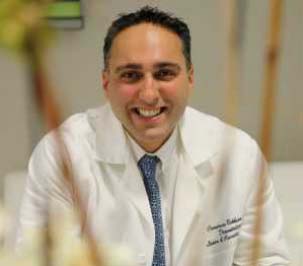
Dr. Cameron Rokhsar, MD, FAAD, FAACS, is the founder and medical director of the New York Cosmetic, Skin, & Laser Surgery Center. Dr. Rokhsar is a graduate of Harvard College and NYU School of Medicine. Dr. Rokhsar is double board certified in dermatology and micrographic dermatologic surgery, being one of the few select dermatologists in the country who is also fellowship trained in laser surgery. A researcher and innovator, Dr. Rokhsar is the creator of the non-surgical nose job and has been instrumental in the research and development of laser systems such as the Fraxel, CO2, Mirady, Vbeam, Themitight, and Ulthera devices. An Associate Professor of Dermatology at Mount Sinai Hospital in NYC, Dr. Rokhsar actively teaches the cosmetic dermatology clinic to the resident at Mount Sinai. An expert injector of fillers, and a trainer for many companies, patients fly in from around the world to see Dr. Rokhsar in his Garden City and Manhattan offices in New York.
 Dr. Rokhsar was chosen by
magazine as a top dermatologist in its Best Doctors 2017, 2018, 2019, 2020, 2021, 2022 and 2023 issues.
Dr. Rokhsar was chosen by
magazine as a top dermatologist in its Best Doctors 2017, 2018, 2019, 2020, 2021, 2022 and 2023 issues.





 Dr Rokhsar is a wonderfully skilled dr who took the time to help me manage a very challenging diagnosis and treatment . He took his time to answer all my questions and his office staff are great as well . Highly recommend this dr!!!Gwenn Kudler2023-03-09Very very professional. The office staff could not have been nicer and very helpful Dr R "Rockstar Doc" is certainly on the top as a surgeon. In addition no discomfort at all. I would not hesitate to refer anyone to Dr. Rokhsar. Thank you!!!Susan Capozzoli2023-03-03Dr Rokshar is very personable and made me feel comfortable throughout my experience there.Michael Morgan2023-02-27Dr. Cameron is the best dermatologist! He is very personable and his consultations, diagnosis, recommendations and treatments are always spot on. His staff is very pleasant and helpful. Overall, a great place for all your dermatological needs.Susie Chen2023-02-20Dr. Rokhsar is the best dermatologist, his services are efficient and effective. The best decision I’ve ever made. THANK YOU DR. Rokhsar!!!Arissa Rivera2023-02-20Dr. Rokshar is excellent and cares about his patients. If Mohs surgery is needed one does not have to change doctors because it is done by the doctor.The office is clean, staff is friendly and it’s easy to get an appointment. I would not hesitate to recommend this practice.Sandy SimonKlein2023-01-25Always a great Botox Experience!..Debra Boyce2023-01-24My wife has never been happier and it’s all thanks to Dr.Rokshar’s skin treatments. Thank you !matiese grosch2023-01-17Dr Rockshar is amazing!Two of Us Event Planners2023-01-16